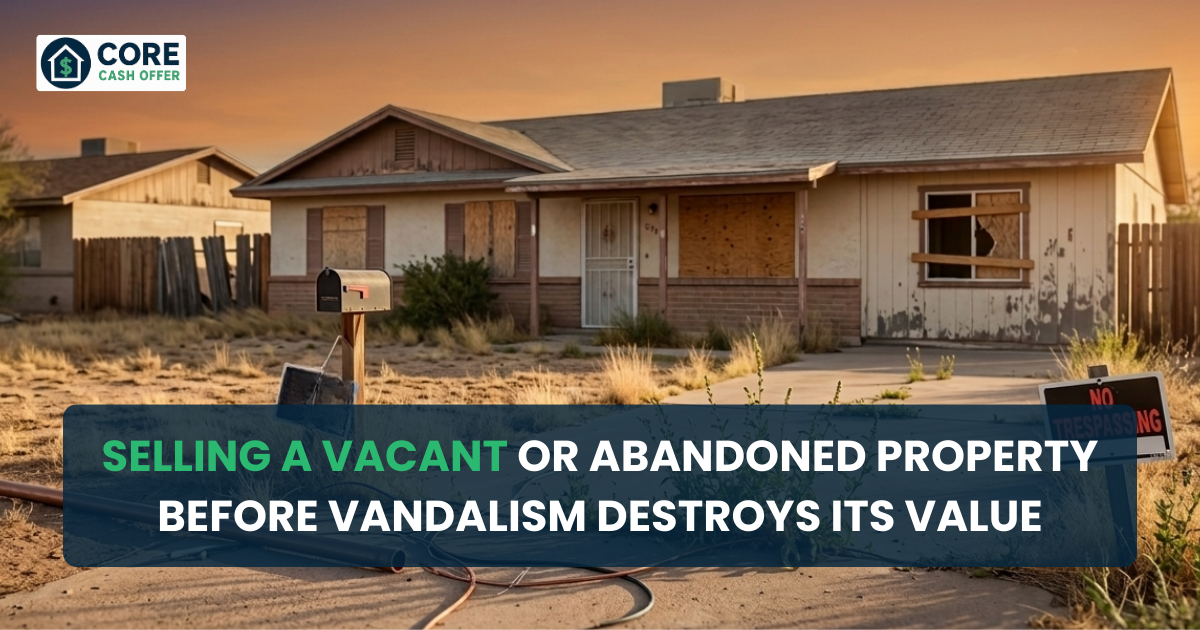
Whether it was an inherited home in Mesa or a rental in Tucson that you just couldn't manage anymore, leaving a property sitting empty in the Arizona sun is a high-stakes gamble. In 2026, the risks associated with "zombie properties" have escalated, as squatting syndicates and copper theft become increasingly sophisticated.
If you have a house that’s currently boarded up or gathering dust, here is why waiting to sell is likely costing you more than any potential market appreciation.
The Risks of Leaving a Property Unattended
In Arizona, a vacant home isn't just "quiet"—it’s a target. The desert environment and the 2026 legal landscape have created three major "value killers":
- Squatters and Unauthorized Occupants: Arizona's "adverse possession" and tenant rights laws can make removing a squatter a legal nightmare that takes months. Once someone moves in, your property value can drop by 20% to 30% simply due to the interior destruction and legal fees.
- The "Copper Harvest": Professional thieves can strip a home’s plumbing and HVAC wiring in less than two hours. In the current 2026 economy, the scrap value of copper is high, but the cost to repipe your home is astronomical.
- Monsoon and Heat Damage: Without the AC running to circulate air, Arizona homes can reach internal temperatures of 130°F, causing drywall to crack and "dry rot" to set into cabinets and flooring.
Visit: Should You Repair Your Roof and HVAC Before Selling in 2026?
Out-of-State Owners: Managing a Sale from 1,000 Miles Away
If you live in Seattle, Chicago, or New York, managing an Arizona property feels like a part-time job you never applied for.
Modern cash buyers in Arizona have streamlined the process for long-distance sellers. You no longer need to fly into Sky Harbor just to sign a deed. Through Remote Online Notarization (RON) and mobile notaries, you can execute a full closing from your laptop.
Insight: Reliable cash buyers will often handle the "trash-out" and cleaning, meaning you don't have to hire local contractors to clear out old furniture or debris before the sale.
How Vacancy Insurance Costs are Eating Your Profits?
Most homeowners don't realize that their standard insurance policy often becomes void after 30 to 60 days of vacancy. To stay protected, you have to switch to "Vacant Home Insurance," which is significantly more expensive.
In 2026, the math for a vacant property looks like this:
$$C_v = P_s \times (2.5 \text{ to } 3.0)$$
Where:
- $C_v$ is the Cost of Vacant Insurance
- $P_s$ is the Standard Premium
When you add up the increased premiums, the property taxes, and the "nuisance" liens from the city for overgrown weeds, a vacant home can easily drain $1,000 to $2,500 per month in pure "holding costs" without any equity gain to show for it.
The "Sight Unseen" Cash Offer: How It Works
You might think you need to "fix it up" to get an offer. In the 2026 cash market, that’s a myth. Professional investors often make "sight unseen" or "digital-first" offers based on:
- Exterior Photos/Drone Footage: They’ll check the roof and neighborhood.
- Property Records: Verifying the foundation and square footage.
- Local Comps: Comparing your home to renovated properties nearby.
This allows you to get a firm number without ever having to step foot inside a potentially dangerous or vandalized building.
FAQs
Can you buy a house that’s boarded up?
Yes. In fact, many Arizona cash buyers prefer these properties because they specialize in full-scale rehabilitations. Boards on the windows won't stop a cash offer, though they will factor the cost of potential interior damage into the price.
How do I get an offer without being there in person?
Most buyers will send a local representative or a specialized inspector to do a "walk-around." You can provide access via a lockbox or a local contact. All paperwork is then handled through secure digital portals like DocuSign.
About the Author
Core Cash Offer
Published on March 9, 2026